
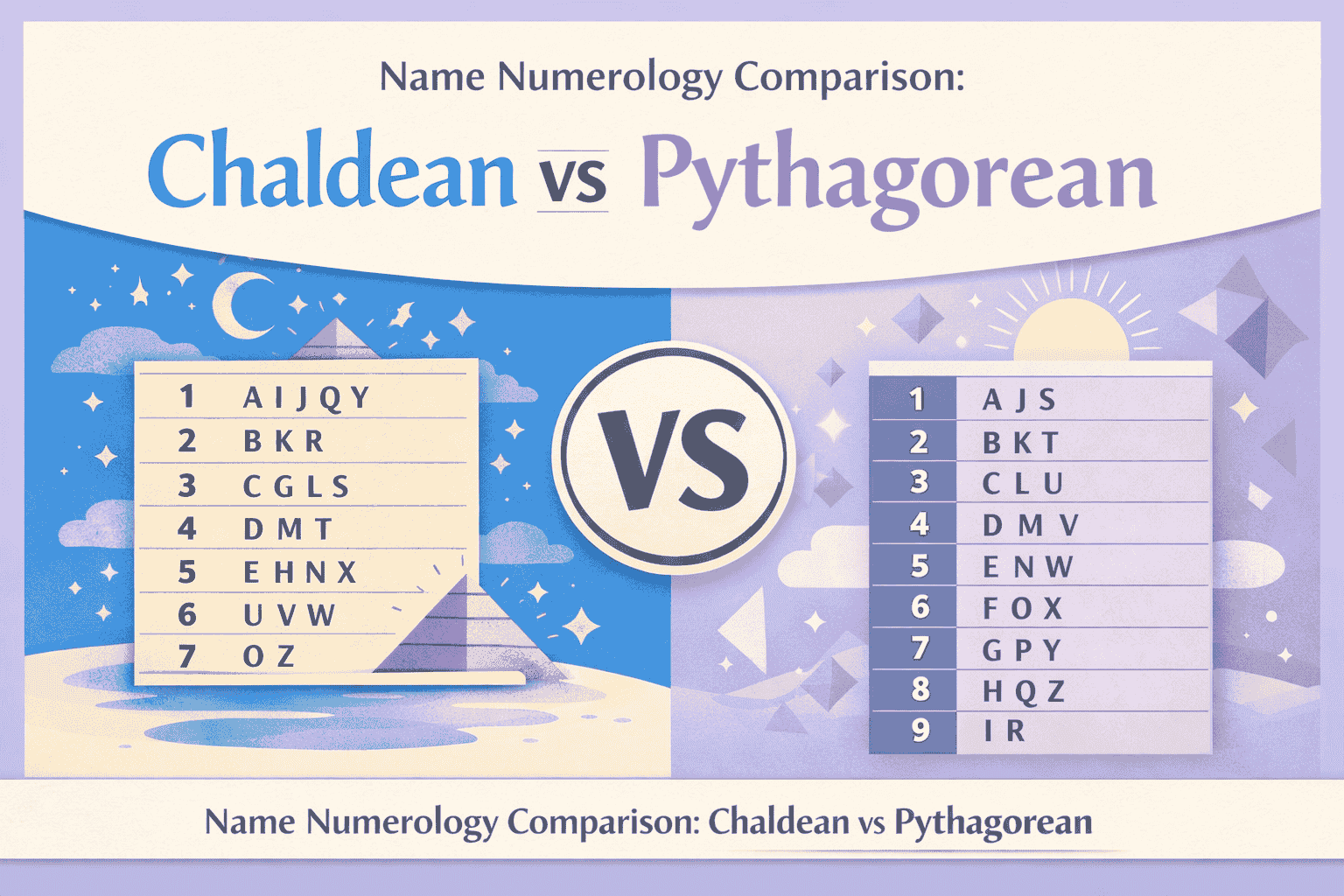
Numerology, the study of numbers and their mystical influence on human life, offers fascinating tools for self-discovery. Two systems dominate this field: the ancient Chaldean numerology and the widely used Pythagorean numerology. While both aim to decode the energetic blueprint of your name and birth date, their philosophies, methods, and applications differ profoundly.
This definitive guide explores the core principles of each system. We will dissect their origins, calculation methods, and inherent strengths to help you understand which approach might offer the most meaningful insights for your journey.
What Is Chaldean Numerology?
Chaldean numerology is one of the oldest known numerological systems, with roots tracing back to ancient Babylon. It is a complex, vibration-based system that many practitioners consider highly accurate for predictive insights and deep spiritual analysis.
Origin of Chaldean Numerology
This system originates from the Chaldeans, a wise and astrologically advanced people who ruled Babylon between 625 and 539 BCE. Their deep understanding of cosmic forces and stellar vibrations was integrated into their numerological practice. Unlike later systems, Chaldean numerology is fundamentally tied to the energetic sound and vibration of letters rather than a simple sequential order. This acoustic connection makes it a uniquely mystical and esoteric framework.
How Chaldean Name Calculation Works
The Chaldean method is distinct in several key ways. Its alphabet chart assigns numbers 1 through 8, deliberately excluding the number 9, which is considered sacred and reserved for spiritual interpretation. The letters are grouped not in sequence but according to their perceived vibrational quality.
The Chaldean Numerology Chart:
| Number | Letters |
|---|---|
| 1 | A, I, J, Q, Y |
| 2 | B, K, R |
| 3 | C, G, L, S |
| 4 | D, M, T |
| 5 | E, H, N, X |
| 6 | U, V, W |
| 7 | O, Z |
| 8 | F, P |
Calculation focuses on the name you currently use—your “known-by” name—as its daily vibration is deemed most relevant. The process involves summing the values of each letter to reach a compound, often double-digit, number. These compound numbers are highly significant; single digits represent outer influences, while double digits reveal powerful inner aspects. For a detailed breakdown, you can use our Name Numerology Calculator set to the Chaldean method.
What Is Pythagorean Numerology?
Pythagorean numerology, often called Western or Modern numerology, is the most popular and widely practiced system today. Developed from the teachings of the Greek philosopher Pythagoras, it offers a structured and logical framework for understanding core personality and life path energies.
Origin of Pythagorean Numerology
Attributed to Pythagoras (c. 570–495 BCE), this system is rooted in his famous maxim, “All is number”. Pythagoras and his followers believed numbers were the fundamental, harmonious building blocks of the universe. While the direct historical link to letter-number correspondence is debated, the system is built upon his philosophical principles, translating them into a practical tool for understanding the self and one’s destiny.
How Pythagorean Name Calculation Works
The Pythagorean system is praised for its simplicity and logical structure. It uses a sequential, repeating assignment of the numbers 1 through 9 across the English alphabet.
The Pythagorean Numerology Chart:
| Number | Letters |
|---|---|
| 1 | A, J, S |
| 2 | B, K, T |
| 3 | C, L, U |
| 4 | D, M, V |
| 5 | E, N, W |
| 6 | F, O, X |
| 7 | G, P, Y |
| 8 | H, Q, Z |
| 9 | I, R |
Calculations are based on your full birth name, as it is believed to carry your innate, unchanging potential. The system calculates several core numbers:
- Life Path Number: Derived from your full birth date, representing your life’s purpose and overarching journey.
- Expression/Destiny Number: Calculated from your full birth name, revealing your natural talents and outward destiny.
- Soul Urge Number: Based on the vowels in your name, it indicates your inner motivations and deepest desires.
- Personality Number: Based on the consonants, it describes how others perceive you.
Key Differences Between Chaldean and Pythagorean Numerology
Understanding the fundamental contrasts between these systems is crucial for determining which resonates with you. The differences span their foundational logic, interpretive depth, and practical use.
Calculation Method
The technical divergence is the most apparent.
- Number Range & Assignment: Pythagorean numerology uses a repeating 1-9 sequence assigned alphabetically. Chaldean numerology uses 1-8, arranged by vibrational quality, and holds 9 as sacred.
- Name Basis: Pythagorean uses the full birth name. Chaldean uses the name you are most known by in daily life.
- Output Numbers: Pythagorean typically reduces calculations to a single digit (though master numbers 11, 22, 33 are retained). Chaldean places great importance on compound double-digit numbers before final reduction.
Accuracy & Interpretation
This is where each system’s philosophy shapes its insights.
- Pythagorean (Interpretive & Psychological): This system excels in providing a holistic personality profile. It’s like a psychological blueprint, great for understanding your strengths, challenges, and relational dynamics. Its strength lies in structured self-analysis and life guidance.
- Chaldean (Predictive & Vibrational): Often described as more “accurate” for specific outcomes, Chaldean numerology is highly predictive and karmic. Its focus on sound vibration and compound numbers makes it the preferred system for name correction and analyzing the tangible impact of a name’s energy on destiny and events.
Popular Usage
- Pythagorean Numerology: Dominates in the West. It is the best system for beginners due to its straightforward rules and is most commonly found in modern numerology books and general readings.
- Chaldean Numerology: Maintains a strong presence in practices focused on name analysis, correction, and advanced predictive work. It is considered more specialized and is frequently integrated with Vedic or esoteric traditions.
Which Numerology System Is Best for Name Calculation?
The question of which system is “best” depends entirely on your intention and what you seek from a numerological analysis.
Choose Pythagorean Numerology if:
- You are new to numerology and want an accessible, logical starting point.
- Your goal is general self-discovery, understanding your core personality, life path, and inner motivations.
- You want a broad, holistic overview of your character and potential.
Choose Chaldean Numerology if:
- You are seeking specific, predictive insights or karmic understanding.
- You are considering a name change (for yourself, a child, or a business) and want to analyze the vibrational impact.
- You want a deep, esoteric analysis of the name you actively use and its influence on your daily reality.
Many seasoned practitioners recommend using both systems for a layered perspective. Start with a Pythagorean analysis for a solid foundational profile, then explore a Chaldean reading of your used name for nuanced, vibrational insights.
Ultimately, the most accurate and meaningful system is the one whose language and results resonate most powerfully with you. To experience the difference firsthand, use our Name Numerology Calculator to explore your name through both the Pythagorean and Chaldean lenses. Discover the unique insights each offers and begin unlocking the numerical blueprint of your destiny.
🔹 3️⃣ Chaldean vs Pythagorean Numerology – FAQ
Q1. What is the difference between Chaldean and Pythagorean numerology?
Chaldean numerology is vibration-based, while Pythagorean numerology is based on alphabetical order.
Q2. Which numerology system is more accurate for names?
Many experts consider Chaldean numerology more accurate for name analysis, while Pythagorean is simpler to use.
Q3. Can I use both numerology systems together?
Yes, both systems can be used together for deeper insights into name numerology.
Q4. Does a name numerology calculator support both systems?
Advanced name numerology calculators can analyze names using both Chaldean and Pythagorean methods.